
呂宋について / About 'RUSU'
【呂宋とは / What is RUSU?】
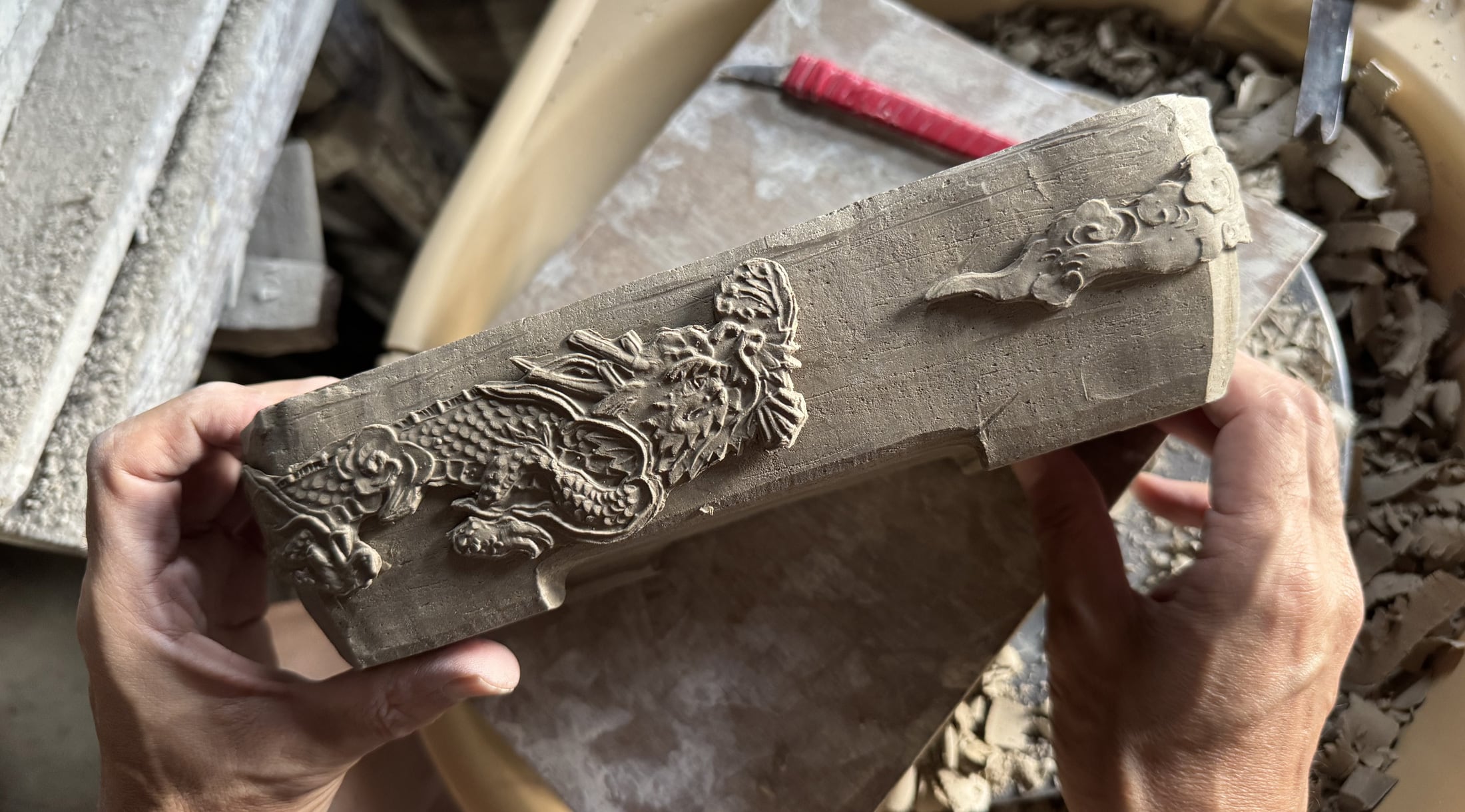
瀬戸呂宋は江戸時代中期の18世紀中頃から19世紀後半にかけて瀬戸(愛知県瀬戸市)で作られた鮮明な緑色の釉薬が特徴の焼きものです。美しい装飾も特徴的で、同じように緑釉がかけられた「織部」とは区別されています。呂宋は遺跡からの発掘例も多く、また浮世絵にもしばしば描かれていることなどから江戸時代の人々に広く親しまれていたことがうかがえます。一方、その名前の由来や消滅時期などに関する明確な記録はなく、神秘的な焼きものでもあります。
幕末から明治時代初期にかけての混迷期に消滅してしまった瀬戸呂宋。同じ地で同じ時代から続く窯元の3代目作家が試作を重ね、復元しました。
Seto RYSU is a pottery made in Seto (Seto City, Aichi Prefecture) from the mid-18th century to the late 19th century, characterized by its vivid green glaze. Its decorations are also diverse, distinguishing it from the similarly green glazed 'Oribe.' Many RUSU have been excavated from archaeological sites, and it is often depicted in ukiyo-e prints, indicating that it was popular among people during the Edo period. On the other hand, there are no clear records regarding the origin of its name or the time of its disappearance, making it a mysterious pottery. Seto RUSU disappeared during the chaotic period from the late Edo period to the early Meiji era.
A third-generation potter from a historic kiln, operating in the same region since the same period, has successfully restored this piece after numerous trials.
テキストを入力してください
◆貼花文 / CHO KA MON
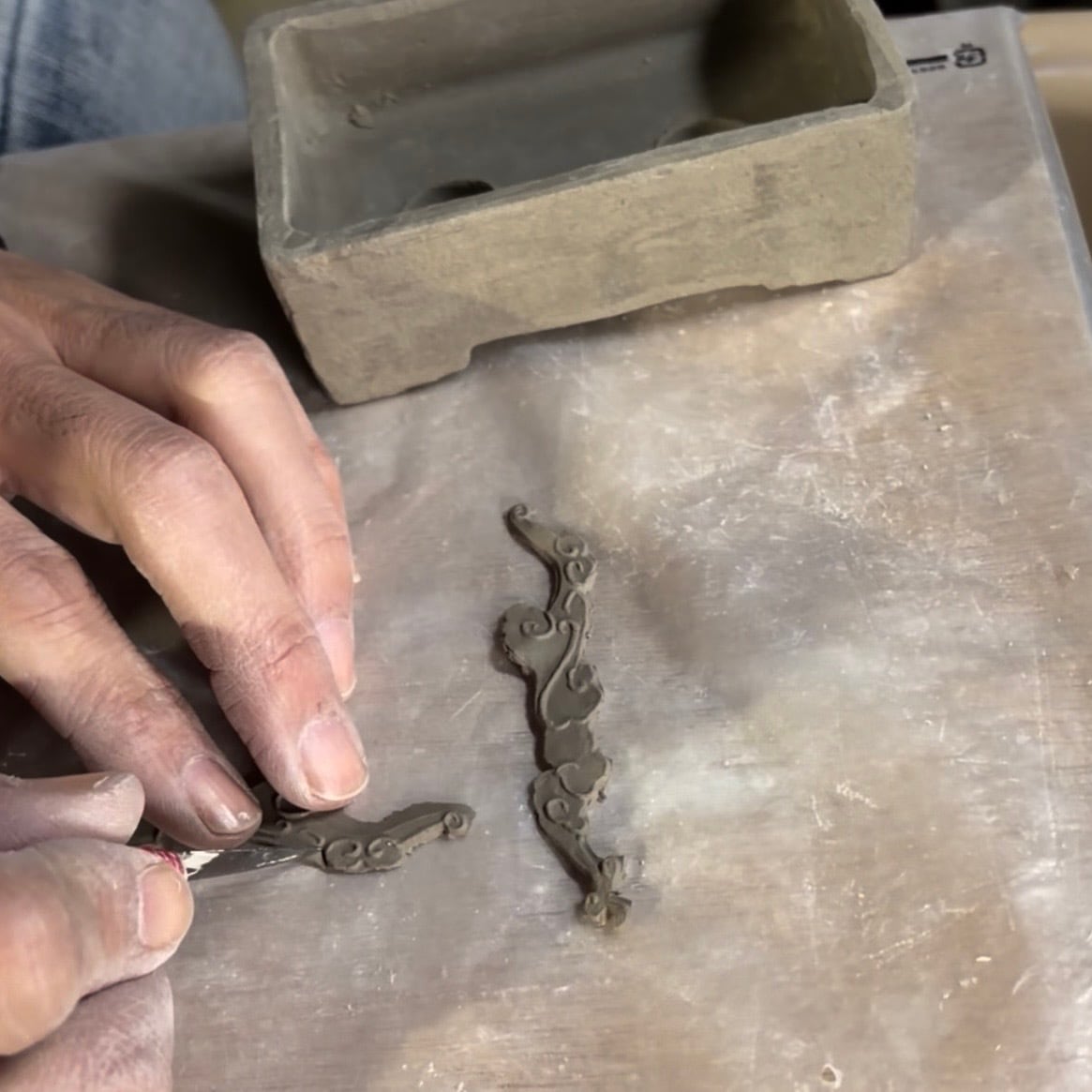
型や手作業で作成した立体的な粘土の模様を表面に貼り付けて装飾する技法。
成形時や乾燥後など、模様部分を何度もヘラで削って形を整えます。
A technique where clay patterns are attached to the surface for decoration. The patterns are repeatedly shaped and trimmed.
◆印花文 / IN KA MON
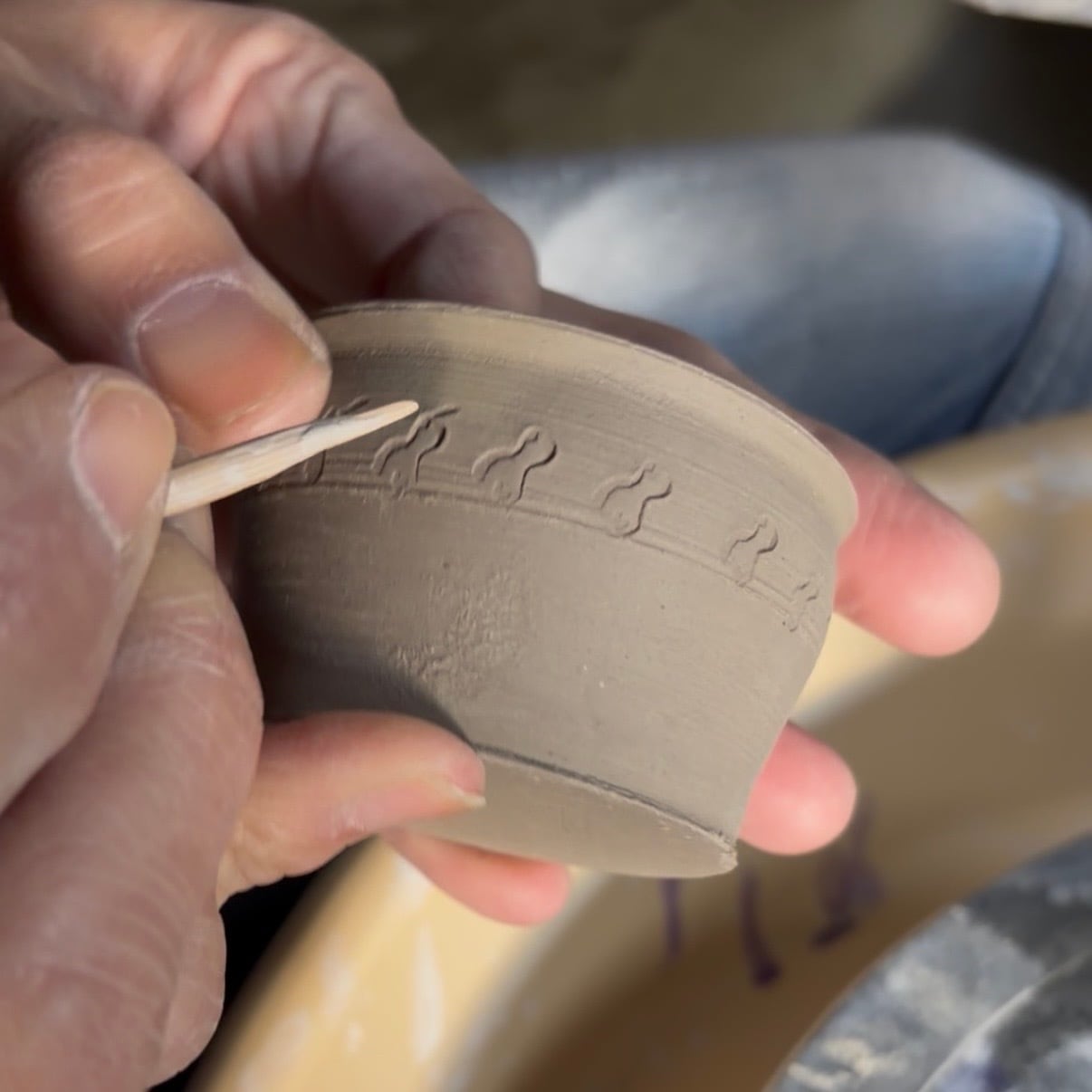
粘土が乾燥する前に印(スタンプ)を押して凹凸の模様をつける技法。
凹んだ部分に釉薬がたまり、模様が浮き上がります。伝統的な模様が使われることが多いです。
Stamping technique. The glaze pools in the recessed areas, making the pattern stand out.
Traditional patterns are often used.